From Counselling to Visa — We Guide You at Every Step

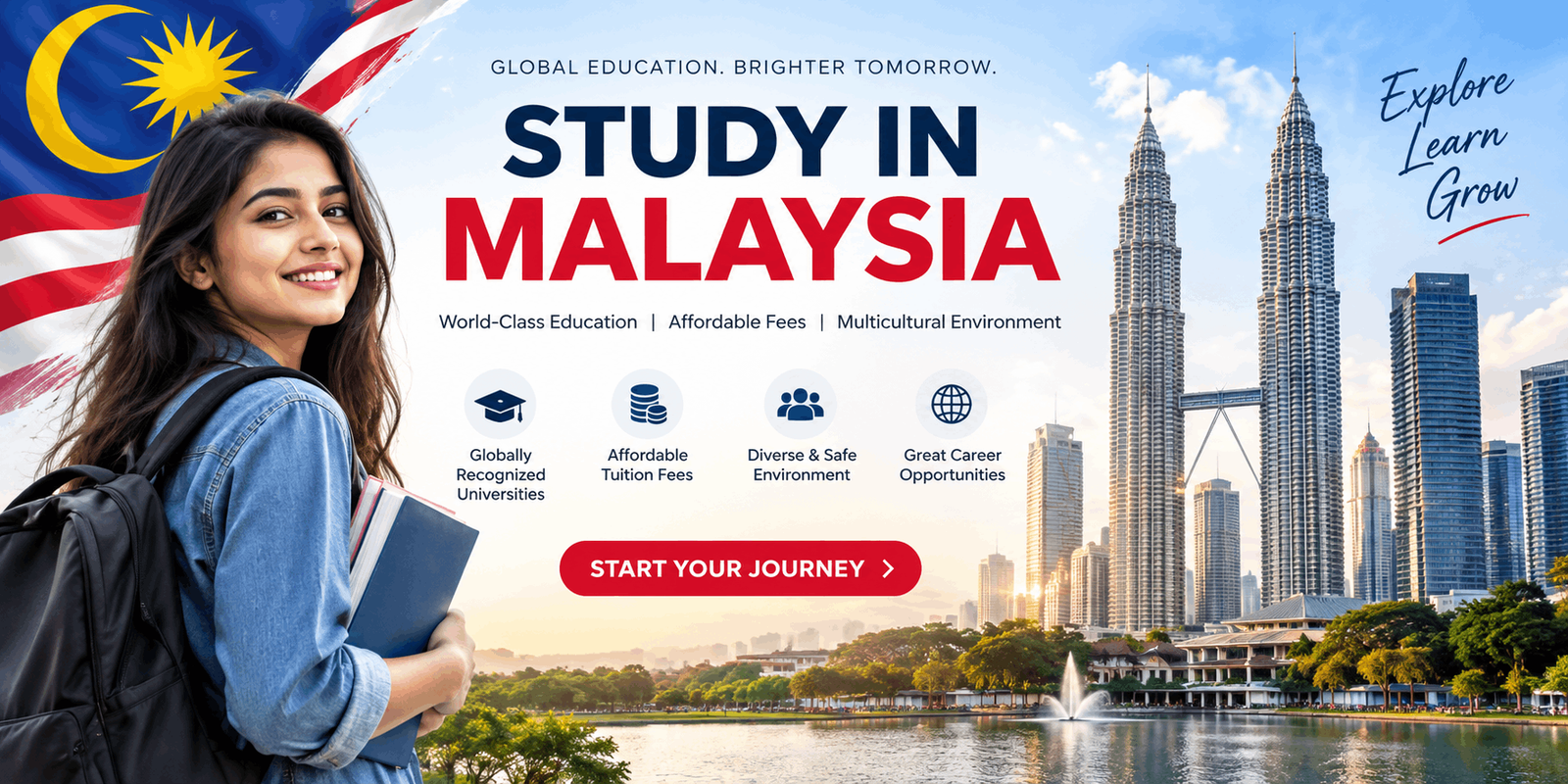

Choosing a study destination is about more than selecting a university. Students need to consider education quality, affordability, lifestyle, career opportunities and the overall international experience.
Mauritius has developed a diverse higher-education system that includes public universities, private institutions and international partnerships. Students can explore programmes designed around academic knowledge as well as practical and professional skills.
The all-inclusive programme is available at a total cost of MYR 24,000, covering MYR 12,000 for YTL-ICHM and MYR 12,000 for IMSC. This comprehensive programme offers students a structured pathway to begin their international academic journey in Malaysia.
World-renowned institutions: Over 20 Malaysian universities are listed in the Times Higher Education (THE) and QS World University Rankings. Malaysia is also home to 5 universities in the top 200 globally (QS 2026) and branch campuses of elite Australian and UK institutions, such as Monash University and the University of Nottingham.
Quality education: Malaysia offers high-quality education, with globally renowned universities offering diverse programmes and advanced infrastructure.
Affordability: Tuition and living costs are roughly one-third of the cost in the US or UK, making it very affordable for Indian students. Kuala Lumpur, the capital, is considered one of the best student cities of 2025, ranking 23rd in the world.
Easy communication: English is the primary medium of instruction at private universities and is widely spoken nationwide.
Multicultural environment: Malaysia is home to diverse nationalities, including a large population of Indians (6.6%), Chinese, and other indigenous cultures, making it a welcoming place for international students.
Safe and peaceful society: Consistently ranked among the top 20 safest countries and 10th most peaceful globally as per the Global Peace Index.
Post-study rights: The Graduate Pass allows students from many countries to stay for one year after graduation to search for employment.
The Malaysian education system is overseen by the Ministry of Education (MOE) for school-level learning and the Ministry of Higher Education (MOHE) for tertiary studies. Malaysia has also launched the National Education Blueprint 2026–2035, which focuses on skills-based learning and trending disciplines like AI and STEM.
Key features:
Dual curricula: Students can choose between the National Curriculum (leading to the SPM exam) or International Curricula (like IGCSE or IB) offered at over 100 international schools.
TVET integration: Technical and Vocational Education and Training (TVET) is being integrated into the school curriculum for students to explore vocational pathways.
MQF 2nd Edition: The Malaysian Qualifications Framework (MQF) standardises academic and vocational credits to align with the international higher education system.
New electives: Universities will add over 1,500 courses and expand several electives in law, finance, banking, accounting, AI, economics and more.
Higher education landscape
Malaysia is home to over 90 institutions:
Public institutions (Government-funded):
Public universities
Polytechnics (technical and engineering training)
Community colleges (reskilling and upskilling for school leavers)
Teacher training institutes
Technical and vocational education (hands-on training, upskilling pathways)
Private institutions:
Private universities and university colleges offer degrees and higher qualifications, often in collaboration with foreign universities
Foreign university branch campuses award the same degrees as their overseas campuses at local costs
Private colleges offer twinning and 3+0 degree programmes with UK, US, or Australian universities


 Trustindex verifies that the original source of the review is Google.
 Trustindex verifies that the original source of the review is Google.
 Trustindex verifies that the original source of the review is Google.
 Trustindex verifies that the original source of the review is Google.
 Trustindex verifies that the original source of the review is Google.
 Trustindex verifies that the original source of the review is Google.
 Trustindex verifies that the original source of the review is Google.
 Trustindex verifies that the original source of the review is Google.
 Trustindex verifies that the original source of the review is Google.